
 SCAM ALERT: Be aware of scammers impersonating Bupa recruitment personnel.

More than attending: What Garma taught us about listening, culture and connection.
Every year, people from across Australia travel to Gulkula in northeast Arnhem Land for Garma, a four-day celebration of Yolngu life and culture hosted by the Yothu Yindi Foundation.
Australia’s largest Indigenous gathering, Garma brings Yolngu clans and families together with visitors from across Australia and around the world. Through miny’tji (sacred designs, patterns and symbolic systems), manikay (ceremonial song), bunggul (ceremonial dance), storytelling and discussion, it creates a space for Yolngu knowledge, culture and traditions to be practised, shared and celebrated on Yolngu Country.

Arnhem Land
Arnhem Land is a vast wilderness area in the northeast corner of Australia’s Northern Territory. It's home to the traditional landowners, the Yolngu people.

Yolngu
Traditionally means "person," "human," or "people" in the Indigenous languages of northeast Arnhem Land, Northern Territory, Australia. Today, the term specifically refers to the Aboriginal peoples of northeast Arnhem Land.

Yothu Yindi Foundation
An Australian not-for-profit charitable organization established in 1990 to promote the cultural development of Yolngu people and improve life outcomes for Indigenous Australians.
In 2026, seven Bupa people travelled to Gulkula to volunteer at Garma. Over 12 days, they helped prepare the site and support the Festival, while having a rare opportunity to experience Yolngu culture, build connections and learn on Country.
Bupa’s involvement in Garma is grounded in the belief that greater cultural understanding comes from listening, learning and building genuine relationships. The experience gives our people an opportunity to contribute while bringing new perspectives back into Bupa and the way we support our people, customers and communities.
Experiencing culture where culture leads
At Garma, visitors are guests on Yolngu land. For Sarah Tickle, Wellbeing Specialist at Bupa, that meant stepping outside the familiar and experiencing a place where culture, language, family, Country and storytelling shaped everyday life.
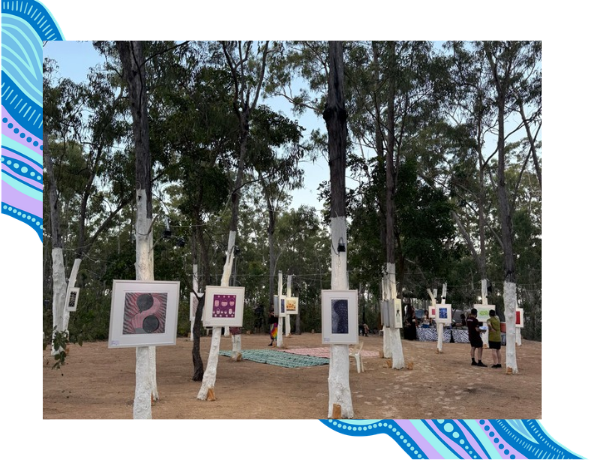
“As non-Indigenous, I think it was an eye-opening experience that opened my heart, my soul, my mind, everything.”
Sarah learnt to see Country differently, from the stories held in the stars to the changing seasons. That experience also changed how she thinks about allyship back at Bupa.
“I think it’s given me the courage to speak up more… being able to be probably a more experienced and learned ally has probably been the biggest part for me in all of this.”.
Culture, identity and pride
Tristen, a proud Noongar man from Wardandi Country, and Bupa’s First Nations Engagement Lead, reflected on growing up with connections to his ancestry that had not always been openly discussed within his family. Garma gave him an opportunity to immerse himself in culture, to learn from those around him and reflect on his own connection to culture and family.
“It’s so nice to be in an environment where you can actually let your mind be at ease and experience culture and stories and what’s in front of you.”
For Hugo, a phone call with his grandfather while at Garma connected the experience with his own family history and identity.
“This experience was one of those that really, really helped me feel my sense of identity and that sense of pride. Even though it wasn’t my Country… I just felt so proud to be Aboriginal at that moment.”
There is no single First Nations experience. Connections to culture, Country, family and identity are deeply personal, and opportunities like Garma can create space for people to explore those connections on their own terms.
Contributing without taking centre stage
Volunteering was an important part of the experience.
Before Festival guests arrived, there were tents to prepare, sand to rake and spaces to ready. During Garma, the group worked across the site, supporting the people and infrastructure that kept the Festival moving. “I hoped that our work didn’t necessarily get seen, because that means it did a great job and that everything flowed.” reflects Hugo.
There is a valuable lesson in that. Meaningful partnership does not always mean being visible. Sometimes it means contributing, listening and creating the space for others to lead.
Sarah saw the same thing in the group's approach, “Going as a group and not going as Bupa, going as people that are there to make something successful and to share knowledge… putting others before us, I think that’s what was most powerful.”
Taking the learning home
If an organisation is going to invest in cultural immersion, the experience needs to influence what happens afterwards: how people listen, how they build relationships, how they challenge assumptions and ultimately how services, workplaces and systems are designed.
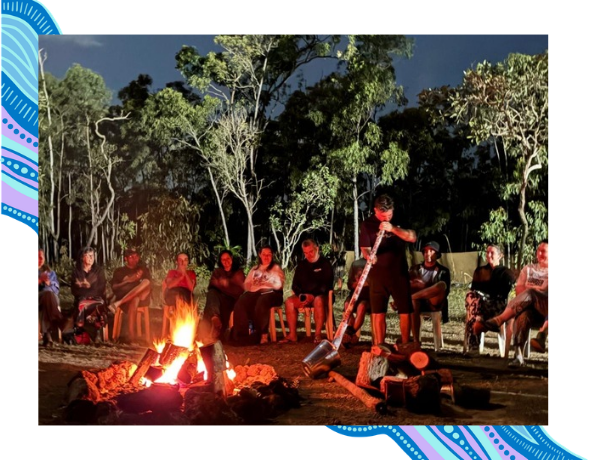
For Tristen, that starts with something deceptively simple: deep listening. “Allowing time and space for deep listening... in meetings, conversations, introductions, because I find my mind is always so fast-paced, especially back home. Sometimes I am just listening, but I have taken away the power in deep listening skills".
It is a lesson with relevance far beyond Garma. In a workplace filled with emails, Teams calls, deadlines and competing priorities, genuinely giving somebody your attention can be surprisingly difficult. Deep listening means creating space to understand before moving to an answer.
For a healthcare organisation, however, there is an even bigger lesson.
During Garma, the group saw examples of Aboriginal-controlled healthcare designed around the needs and preferences of community, including approaches that involved engaging with families rather than automatically relying on an individual one-to-one model.
That prompted discussion about cultural safety, different ways of connecting with people and the danger of assuming one model will work for everyone.
For an organisation caring for millions of people, cultural understanding has a practical consequence. It can shape the way we design experiences, communicate, recruit, build relationships and deliver care. The lesson isn't to take a cultural practice out of its context and replicate it. It is to question the assumption that the way we have always done something will work equally well for everybody.
From intention to action
That is why Bupa's participation in Garma matters. Reconciliation commitments must live beyond documents and strategies. Tristen reflected that “It deepens cultural understanding from a face-to-face perspective that I don’t think any training module could do. Being there in person, being open-minded and listening, it creates that cultural understanding and builds relationships and trust with community and mob.”. The responsibility then sits with us to decide what we do with that understanding.
For Trisha, Assistant Practice Manager at Bupa Dental, that begins with recognising that listening itself requires time and intention. “I’ll take back the importance of slowing down and really listening. Everyone has a story, and understanding someone starts with giving them the time and space to share it. That’s something I want to carry into both my work and everyday life.”
Her reflection also gets to the heart of why Bupa should continue to be present in spaces such as Garma.
“Caring for people means understanding their culture, families and communities as well as their health needs. Attending Garma gives Bupa an opportunity to listen and learn directly from Aboriginal people. What matters is taking that learning back into our work, building trust and following through with meaningful action.”
And that follow-through is ultimately the point.
Garma gives a small number of Bupa people an extraordinary opportunity. The impact becomes much larger when they move this knowledge into practical strategies into the organisation, and when that understanding influences the decisions we make.
“We get to come together, listen, learn, observe, and then bring that back to our business… through the learnings that we have there, then we pivot our internal strategies, our offerings, our recruitment processes.” Hugo said.
Bupa being at Garma matters. But simply being there isn't the measure of success. The more important question is what happens because we were there.
If deeper listening leads to stronger relationships, if lived experience challenges assumptions, if cultural understanding changes the way we design care and candidate experiences, and if more of our people feel supported to reconnect with and celebrate their identity, then the learning travels much further than the seven people who made the journey to Gulkula.
And perhaps that's one of the most valuable things Garma can give an organisation like ours: not an answer, but a better understanding of how to listen before we decide what the answer should be.
Join our talent community
Looking to shape a bright future for everyone? Sign up to our talent community and be the first to learn about new roles.
Join nowSign up for job alerts
Don’t see a role that’s right for you? You can sign up for our job alerts and we’ll make sure to let you know when the right one comes up.